
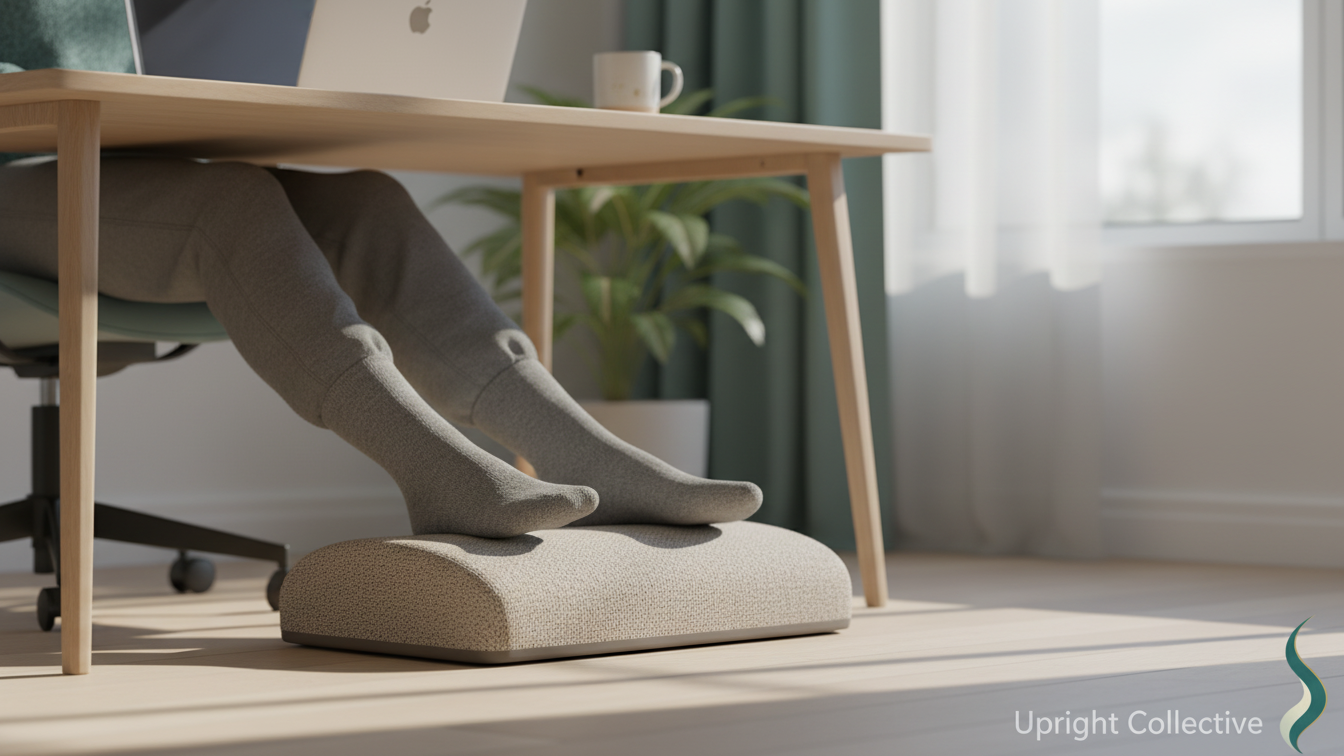
A good ergonomic foot rest can noticeably improve comfort during long workdays. The best options support proper leg alignment, stay in place, and encourage small movements that reduce stiffness.
Look for adjustable height, a non-slip base, supportive foam, and a washable cover. Rocking or textured surfaces help with circulation if you sit for hours.
Even a simple foot rest is a low-cost upgrade that can ease leg fatigue, improve posture, and make desk work feel more sustainable day after day.
Best Ergonomic Foot Rests for Home Office Desks
Sitting at a desk all day takes its toll. I’ve tried a lot of fixes, from fancy chairs to standing breaks, but adding a good foot rest to my setup made a much bigger difference than I expected. The right foot rest gives my legs a place to relax, helps with posture, and keeps me from feeling fidgety halfway through a Zoom meeting.
Unlike chairs, foot rests come in all shapes and sizes; some are super simple foam wedges, while others have adjustable heights or massaging surfaces. If you’re tired of sore ankles, stiff knees, or low back aches after a workday, this is the kind of small investment that makes a surprisingly big impact.
Let’s get into how to pick a foot rest that’ll actually help, a few of my top choices, and the specific features that make each one worth considering. Along the way, I’ll share practical tips and little-known benefits to help you enjoy better comfort every day.
What you’ll find in this guide
- What makes a foot rest ergonomic (and why it matters)
- Seven features that make a big difference
- My favorite footrests for home office setups
- How to use a footrest for real comfort
- Final takeaways for a better workday
7 Key Features to Look for in an Ergonomic Foot Rest
Not all footrests deliver the same experience. The right features turn a generic foam wedge into a product that helps with comfort and posture all workday long. These are the seven details I pay close attention to:
- Height Adjustability
- Non-Slip Base
- Supportive Material
- Removable/Washable Cover
- Rocking or Tilting Function
- Pressure Point or Massage Surface
- Compact Size for Home Office Spaces
Every item on this list addresses a real pain point. If you find your feet dangling, can’t get comfortable, or keep nudging your rest out of place, these features solve everyday problems. Sometimes, a rest that seems minor makes the workday drastically more pleasant. Think about the extra time you spend at your desk and how these features could help ease pressure and boost your comfort.
Why These Features Matter
It’s easy to overlook a footrest’s design, but after using several types, I’ve found that these choices seriously affect daily comfort and long-term health. A good foot rest is more than just a cushion under your desk; it helps you maintain proper alignment, supports healthy circulation, and reduces fatigue in your lower body. Let’s break down why each feature is essential and how it makes a difference during a full day at your desk.
Height Adjustability
Desks and chairs aren’t always made for the same height. A footrest with adjustable height lets me keep my hips, knees, and ankles in a straight line, which helps improve blood flow and reduces leg swelling by the end of the day. Velcro layers, removable inserts, or flip designs all work well for this. It’s handy if your chair isn’t height-adjustable or if you share your workspace with others who need different setups.
Non-Slip Base
If your footrest keeps slipping away, you end up chasing it under your desk. A non-slip base keeps it exactly where you want it, even if you fidget, tap your toes, or constantly reposition your feet. For anyone with hard floors, this little feature is a significant time saver and keeps you focused on your work instead of adjusting your setup over and over.
Supportive Materials
Memory foam is the most common, but some footrests use firm rubber or dense foam blends. This keeps the support even all day, so you don’t end up with a flat pancake after a few months. A good foot rest should spring back and not feel squishy by lunchtime. Sturdy materials are also less likely to collect odors or lose their shape over time, so you get long-lasting value for your purchase.
Removable/Washable Cover
I like being able to throw the cover in the wash every couple of weeks. Some models skip this bit, which makes them get gross quickly, especially if you’re wearing socks or barefoot at home. Removable, machine-washable covers are worth it for long-term use. You’ll be surprised how much fresher your workspace feels when you can actually clean your footrest easily.
Rocking or Tilting
Some footrests flip over for gentle rocking, which keeps my legs awake and improves circulation. Others tilt from side to side, letting me adjust my position without having to think about it. Both are great if you get antsy sitting still or want a little movement during long calls. Subtle movement helps reduce tension and prevent stiffness, especially after several hours at your desk.
Pressure Point or Massage Surface
Textured surfaces or gentle massaging bumps give my feet a mini-massage when I roll them around. If you deal with sore arches or like to take your shoes off during work, these subtle features feel pretty nice. Massaging nodes can help wake up tired feet and add a bit of much-needed comfort midway through your workday.
Compact Size
Home offices are often tight on space. Foot rests between 16″ and 18″ long and under 11″ wide fit under most desks without being in the way. I’ve found that anything bulkier just ends up being a trip hazard. The beauty of a compact design is that you can move your feet freely while keeping the area under your desk organized and neat.
Affiliate Disclosure
This site includes links to products, tools, and resources I personally find useful. While most links are helpful links to other content that relate to mine, you will also find affiliate links. If you buy through those links, I may earn a small commission at no extra cost to you. Your support helps me keep creating honest, helpful content.
My Top Picks for Ergonomic Foot Rests
I’ve tested quite a few footrests in my home office. Here’s a rundown on a couple of popular options, including their highlights and how they work for everyday use. Each one stands out for different reasons, so there’s something here for every workspace.
Everlasting Comfort Adjustable Cloud Foot Rest
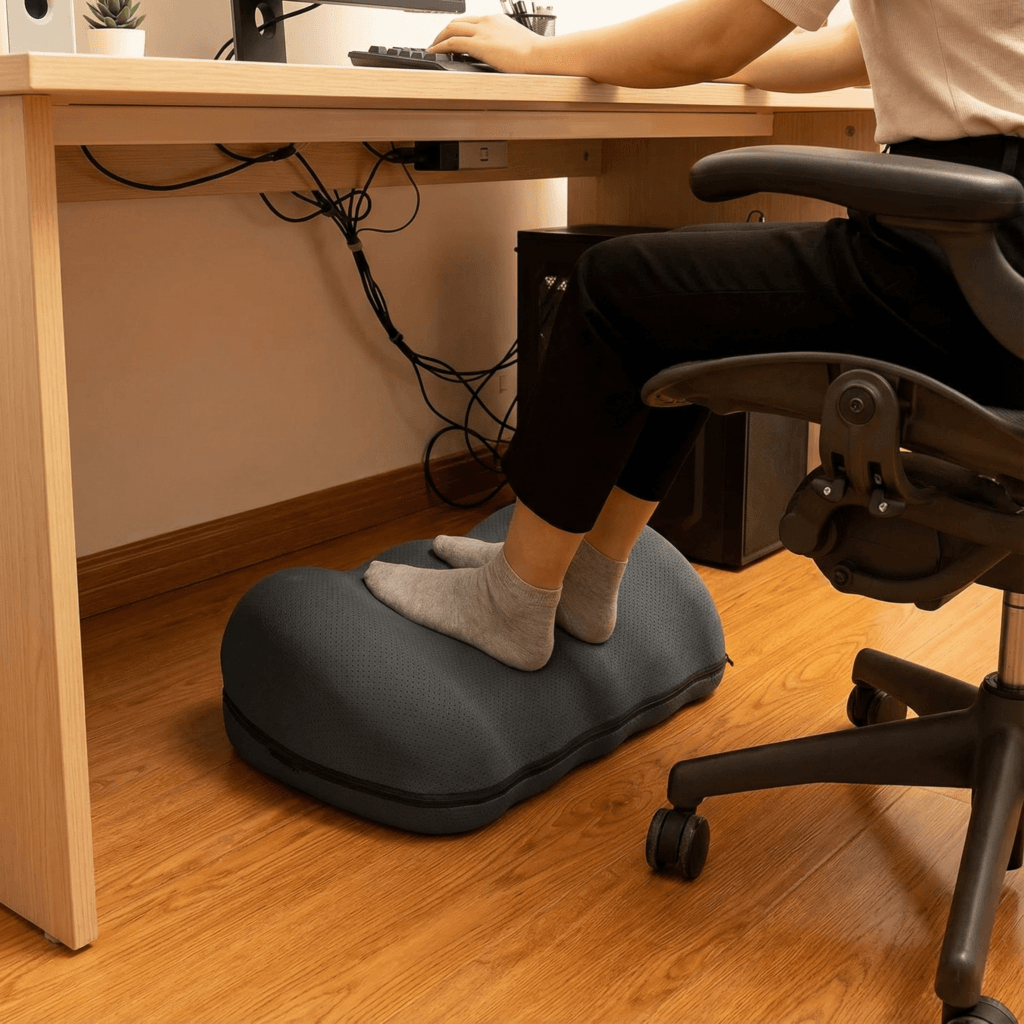
- Material: Memory Foam
- Color: Black Footcloud
- Product Dimensions: 17″L x 10″W x 6″H
- Size: Standard Office
This memory foam model packs a lot of flexibility into a compact package. You can use it flat for steady support or flip the base for a gentle rocking motion. This is really handy for those long video calls when I get restless. The adjustable base is covered in small, raised nodes that give my feet subtle pressure relief. I like that the cover zips off for a quick machine wash. This one feels soft but never saggy, and the non-slip base holds up on hardwood floors.
BlissTrends Foot Rest for Under Desk
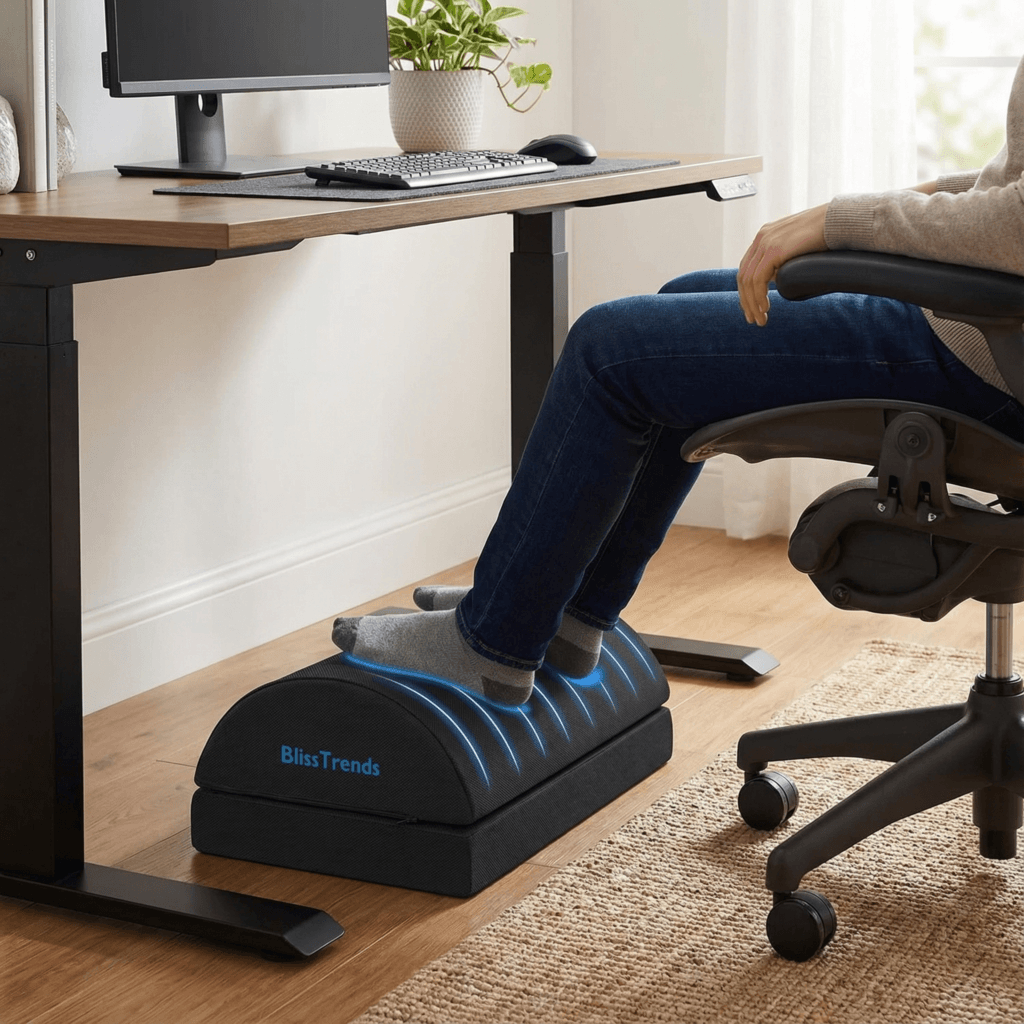
- Material: Foam
- Color: Black
- Product Dimensions: 16.2″L x 9.9″W x 5.7″H
- Size: Large
This dual-layer foot rest offers two height options, thanks to its smart design with velcro and a zipper between the layers. I swap between the thicker and thinner settings depending on my chair height for the day. The top foam layer stays springy and supportive, even after heavy use. Its cover zips off for easy machine cleaning, and the bottom grip keeps it from sliding around. It easily fits under a standard desk and is light enough to take on the go if you work remotely from different spots. Bonus: it can double as a cushion behind your knees on the couch.
Other Worthwhile Options
- Kensington Comfort Memory Foam Adjustable Foot Rest: This classic foot rest tilts and rocks, accommodating different heights and all-day fidgeters. Its design is simple but effective, making it easy to switch up your sitting position. Many reviewers praise it for its sturdy build and flexibility.
- Amazon Basics Under Desk Foot Rest: Its simple, curved design makes it budget-friendly and provides basic ergonomic support for those just trying a foot rest for the first time. No frills, but it gets the job done. This model is also super lightweight, so if you like to rearrange your home office frequently, it’s easy to move wherever you need it.
How to Get the Most Out of Your Foot Rest
Just tossing a footrest under your desk doesn’t magically fix posture or leg pain. Here’s what I’ve found really helps, after lots of experimenting and checking in with ergonomic guidelines:
- Sit fully back in your chair so your feet rest naturally on the footrest. This encourages better alignment and helps you avoid slouching.
- Adjust the footrest height so the knees and hips are roughly even. This reduces tension in the back of your legs and keeps blood circulating well.
- If your chair is on the high side, a thicker footrest (or a double-layer style) fills the gap nicely, ensuring your feet always have a solid surface to rest on.
- Switch foot positions during the day; rock, roll your arches, or stretch out your legs to keep the blood moving. These micro-movements go a long way toward keeping you comfortable.
- Keep the footrest clean, especially if you use it barefoot. A washable cover really comes in handy here, maintaining hygiene and extending the life of your rest.
Ergonomic Foot Rest FAQ
Real questions people ask before buying a foot rest for a home office desk.
Do I really need a foot rest if my chair already feels fine?
If your feet don’t sit flat on the floor comfortably, a foot rest can help a lot. It fills the gap so your legs relax, your hips stay more level, and you stop sliding forward in the chair. If your setup already keeps your knees and hips comfortable, you may not need one.
What height should an ergonomic foot rest be?
Aim for a height that lets your knees sit roughly level with your hips (or slightly lower) while your feet feel supported. That usually means an adjustable foot rest or a two-layer design so you can fine-tune it to your chair and desk.
Is rocking better than a fixed foot rest?
Rocking can be better if you get restless or sit for long stretches. Small movement keeps your legs from feeling stiff and can help circulation. Fixed foot rests feel steadier if you prefer a planted position or you do a lot of precise work at the desk.
Will a foot rest help with lower back pain?
It can help indirectly by improving your leg position and reducing the urge to slouch. When your feet are supported, it’s easier to sit back in the chair and keep your pelvis and spine in a more neutral position. It won’t fix every cause of back pain, but it’s a solid comfort upgrade for many people.
What’s better: memory foam or plastic?
Memory foam feels softer and warmer and is great for all-day comfort, especially if you work in socks or barefoot. Plastic models tend to be firmer and often include tilt or massage texture. If you want cushion, go foam. If you want structure and easy wipe-down, plastic can win.
How do I keep a foot rest from sliding on hardwood or tile?
Look for a non-slip rubber base first. If it still creeps, placing a thin desk mat or grippy rug pad under it usually solves the problem. Sliding is common with lighter foot rests on slick floors.
Are textured or “massage” surfaces worth it?
If your feet get tired or your arches feel sore, yes, they can be surprisingly nice. It’s not a spa treatment, but a little texture encourages movement and gives your feet something to do during long calls. If you’re sensitive to texture, you may prefer a smooth foam top.
How do I use a foot rest correctly at my desk?
Sit all the way back in your chair, then set the foot rest where your feet land naturally. Adjust height so your knees feel supported and you’re not pointing your toes down. Change foot position during the day and use gentle rocking or rolling to keep your legs from going stiff.
What size foot rest fits most home office desks?
Most people do well with a compact model around 16–18 inches long and about 10–11 inches wide. Bigger can be fine, but it can also crowd the under-desk space and turn into something you bump into constantly.
How often should I clean a foot rest?
If you use it in socks or barefoot, washing the cover every couple of weeks is a good rhythm. If it’s a plastic model, a quick wipe-down works. Washable covers are a big deal for long-term use.
Final Thoughts on Picking the Right Foot Rest
Finding the right ergonomic foot rest comes down to matching it to your specific workspace and comfort needs. If you sit for hours at your computer, as I do, a memory foam footrest with adjustable height, a nonslip bottom, and a washable cover really improves comfort. Rocking features or massage surfaces are great if you want a little more movement. Even a basic foam wedge can improve your posture and reduce pressure on your lower legs.
The best part is these aren’t big-ticket upgrades. Most good-quality footrests are affordable and last for years. Small changes like adding a footrest might not seem like much, but once you try one, you’ll notice less fatigue and fewer aches when your workday ends.
Not convinced yet? Check out some product reviews, look for customer photos (especially of the foot rest in real office setups), and don’t be afraid to try a couple out. Your feet, knees, and back will thank you—even after long days in the home office.
If you want to see the ergonomic gear I actually use and recommend, I keep everything in one place. Chairs, foot rests, desk accessories, and small upgrades that make long workdays easier.